Building a High-Converting Checkout Flow for E-Commerce Brands
Building a High-Converting Checkout Flow for E-Commerce Brands in 2026
Reading time: 9 minutes
Here’s a number that should keep every e-commerce founder up at night: shoppers abandon 70.6% of online carts before completing purchase, according to Baymard Institute’s 2026 benchmark update. That’s not a rounding error—it’s billions in recoverable revenue slipping through checkout cracks every single month.
If you’ve ever watched your analytics dashboard and wondered why traffic looks healthy but revenue doesn’t match, your checkout flow is probably the culprit, not your ad spend.
Table of Contents
- Why Checkout Friction Is Costing You More Than You Think
- The Anatomy of a High-Converting Checkout
- Case Study: How a DTC Skincare Brand Recovered $180K
- Common Checkout Mistakes (and Fixes)
- Checkout Performance Benchmarks
- FAQs
- Your Checkout Optimization Roadmap
Why Checkout Friction Is Costing You More Than You Think
Let’s be honest: most brands obsess over top-of-funnel metrics—click-through rates, ad creative, influencer partnerships—while their checkout page quietly bleeds conversions. It’s the equivalent of throwing a great party and locking the front door.
Nick Sharma, a well-known DTC growth consultant, put it bluntly in a 2026 panel discussion: “Your checkout isn’t a formality. It’s the single highest-leverage page on your entire site. A 10% lift in checkout conversion often outperforms a 30% increase in ad budget.”
That’s the mindset shift that separates brands scaling profitably in 2026 from those stuck optimizing Facebook creative for diminishing returns.
The Real Cost of a Broken Checkout
Picture this scenario: you’re running a mid-size apparel brand doing $2M in annual revenue. Your checkout converts at 55% instead of an achievable 70%. That gap represents roughly $270,000 in lost annual revenue—money you already paid to acquire through ads, SEO, or influencer deals. You just failed to close the sale.
What Changed in 2026
Consumer expectations have shifted dramatically. Shoppers now expect:
- One-click checkout options (Shop Pay, Apple Pay, Google Pay) as standard, not novelty
- Real-time shipping cost transparency before the final step
- Mobile-first design that doesn’t require pinching and zooming
- Buy Now, Pay Later (BNPL) options embedded natively, not as an afterthought
Brands ignoring these expectations aren’t just losing conversions—they’re signaling that their business feels outdated.
The Anatomy of a High-Converting Checkout
There’s no single silver bullet here. Well, here’s the straight talk: high-converting checkout flows are built from a stack of small, deliberate decisions that compound.
1. Guest Checkout as the Default
Forcing account creation before purchase remains one of the top three reasons shoppers abandon carts, according to Baymard’s latest research. Make account creation an option after purchase, not a gate before it.
2. Progress Indicators and Single-Page Design
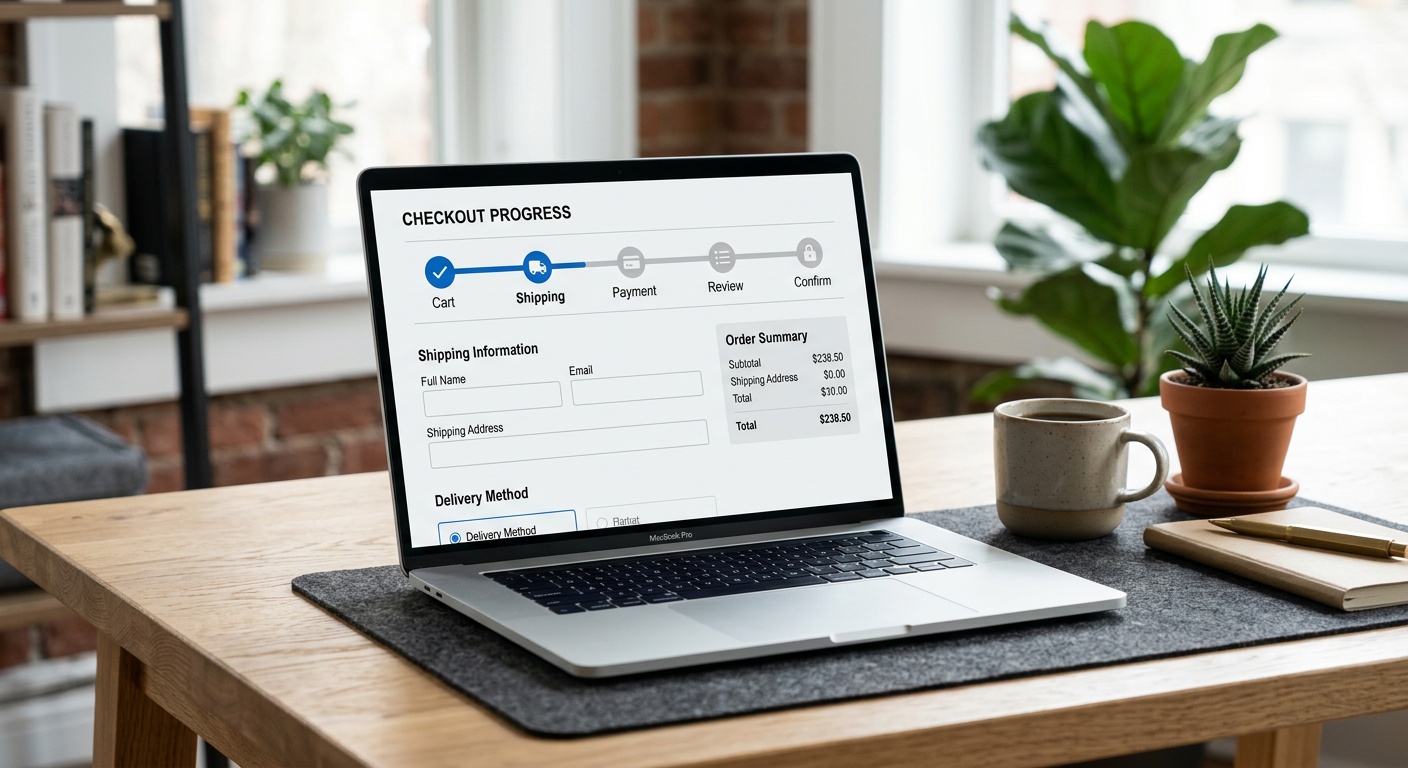
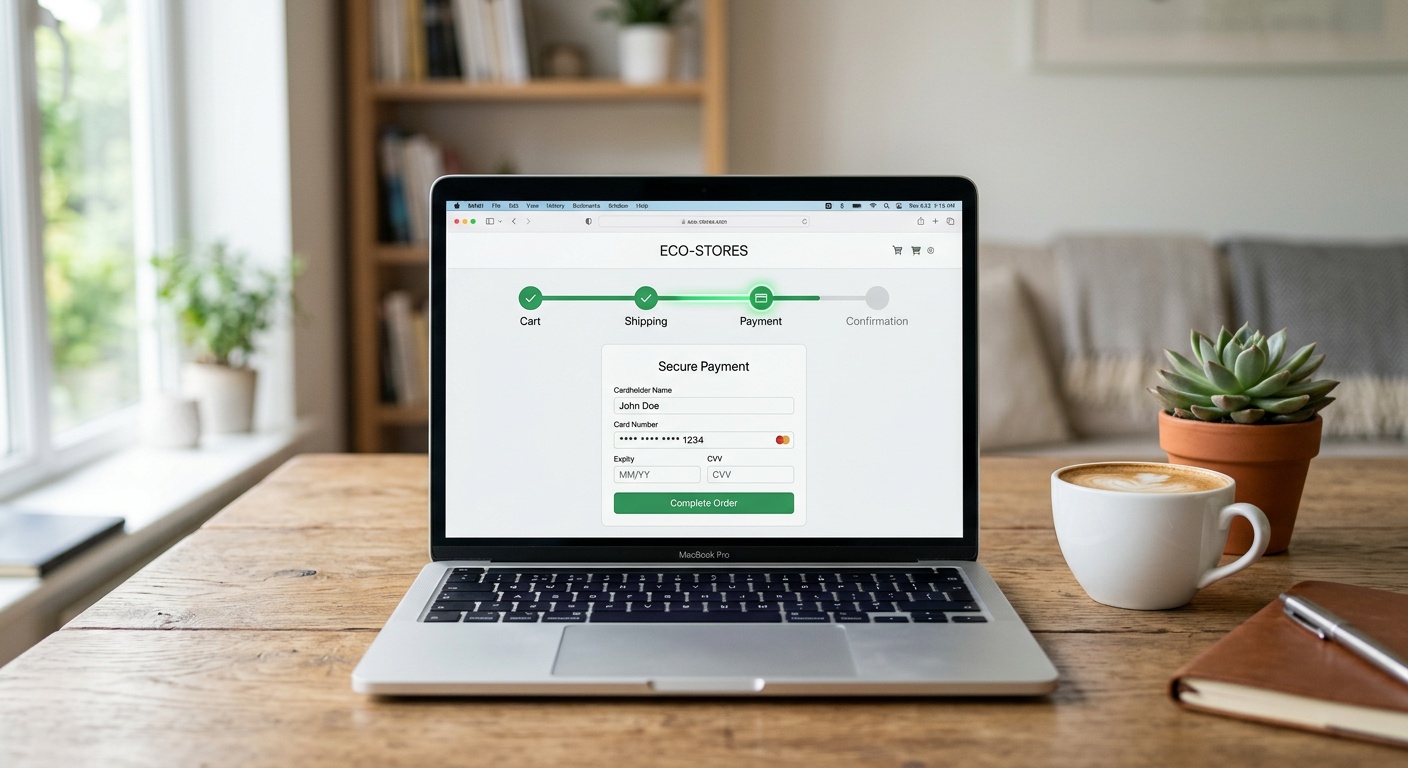
Multi-step checkouts aren’t inherently bad, but shoppers need to see how many steps remain. A simple progress bar reduces perceived friction significantly. Brands using single-page checkouts with collapsible sections have reported conversion lifts between 12-18% in 2026 A/B tests run by Shopify Plus agencies.
4. Trust Signals at the Point of Payment
This is where hesitation peaks. Security badges, clear return policies, and visible customer service contact info directly next to the payment field can reduce last-second bounces.
5. Dynamic Shipping and Tax Calculation
Nothing kills conversion like a surprise $15 shipping fee revealed at the final step. Show estimated totals as early as the cart page, not just at checkout.
Case Study: How a DTC Skincare Brand Recovered $180K
Quick scenario: a mid-market skincare brand, generating roughly $4M annually, noticed checkout conversion stuck at 58% despite steady traffic growth throughout 2025. Their team partnered with a conversion rate optimization agency in early 2026 to diagnose the issue.
The audit revealed three critical problems:
- Shipping costs were only revealed after email and address entry—too late in the journey
- The mobile checkout button was below the fold on smaller screens
- There was no BNPL option despite BNPL usage among their target demographic (women 25-40) exceeding 40% adoption
After implementing upfront shipping estimates, restructuring the mobile layout, and adding Klarna as a payment option, checkout conversion climbed to 71% within eight weeks. On their existing traffic volume, that translated to an additional $180,000 in annualized revenue—without spending an extra dollar on acquisition.
Common Checkout Mistakes (and Fixes)
Mistake 1: Too Many Form Fields
Every additional field is a micro-decision that adds cognitive load. Use address autocomplete APIs and combine first/last name into a single field where possible. Baymard’s research shows the average checkout has 14.88 form elements, while optimized checkouts function well with as few as 7-8.
Mistake 2: Hidden or Late-Stage Costs
This remains the number one cause of cart abandonment year over year. Transparency early in the funnel builds trust and reduces last-minute drop-off.
Mistake 3: Weak Mobile Optimization
With mobile commerce now accounting for over 68% of e-commerce traffic in 2026 per eMarketer projections, a checkout that isn’t thumb-friendly is actively sabotaging revenue. Buttons should be large, payment fields should trigger appropriate mobile keyboards (numeric for card numbers), and autofill should work seamlessly.
Checkout Performance Benchmarks
| Metric | Industry Average (2026) | Top Performers |
|---|---|---|
| Cart Abandonment Rate | 70.6% | 45-50% |
| Mobile Checkout Conversion | 2.8% | 5.5%+ |
| Guest Checkout Adoption | 61% | 85%+ |
| Average Checkout Load Time | 3.4 seconds | Under 1.5 seconds |
| BNPL Option Availability | 54% | 90%+ |
Visualizing the Conversion Gap
The chart below illustrates how specific checkout improvements correlate with conversion lift, based on aggregated 2026 A/B test data from mid-market e-commerce brands.
Practical Roadmap for Implementation
Ready to transform complexity into competitive advantage? Here’s a sequence that works well regardless of your platform (Shopify, WooCommerce, or a headless build):
- Audit your current funnel using session recordings (Hotjar, Microsoft Clarity) to spot where users hesitate or exit
- Enable guest checkout and move account creation to post-purchase
- Add shipping calculators to the cart page, not just checkout
- Integrate at least one BNPL provider—Klarna, Afterpay, or Affirm depending on your audience
- Run mobile-specific usability tests quarterly, since mobile behavior shifts faster than desktop
Pro Tip: Don’t optimize everything simultaneously. Change one variable at a time so you can attribute conversion lifts accurately—otherwise you’re just guessing which fix actually worked.
FAQs
How long should a checkout process take to complete?
Ideally under 90 seconds for returning customers using saved payment details, and under three minutes for first-time buyers entering full information manually. Anything longer significantly increases abandonment risk.
Is a one-page checkout always better than a multi-step checkout?
Not necessarily. One-page checkouts work well for simple products with few variants, while multi-step flows with clear progress indicators can perform better for complex orders involving shipping options, gift messages, or subscriptions. Test both with your specific audience.
Does adding BNPL options actually increase average order value?
Yes—multiple 2026 merchant reports from Klarna and Affirm show average order values increasing 20-30% when BNPL is available at checkout, since customers feel more comfortable splitting larger purchases into installments.
Your Checkout Optimization Roadmap
E-commerce in 2026 isn’t just about driving traffic—it’s about respecting the customer’s time and trust at the exact moment they’re ready to pay you. As acquisition costs continue climbing across paid channels, checkout optimization has quietly become the highest-ROI lever available to most brands.
Here’s your immediate action checklist:
- ✅ Audit your checkout funnel this week using session recordings
- ✅ Enable guest checkout if you haven’t already
- ✅ Display shipping costs before the final payment step
- ✅ Add at least one BNPL provider suited to your customer base
- ✅ Test your mobile checkout on three different device sizes
You’ve likely spent months, maybe years, refining your product and your marketing. Isn’t it time your checkout worked just as hard? Start with one fix from this list today—your next month’s revenue report might just thank you for it.